

Metropus
Natural basis: octopus + city storm drains and flooded tunnels
- Role
- ControllerEngineer
Opens simple latches, changes the texture and color of its skin to match concrete, memorizes a three-dimensional network of waterways and uses discarded objects as shelter and tools.
Origin
A line from coastal canals conquered flooded tunnels, drainage systems and artificial harbors, where exceptional spatial memory was essential.
Appearance
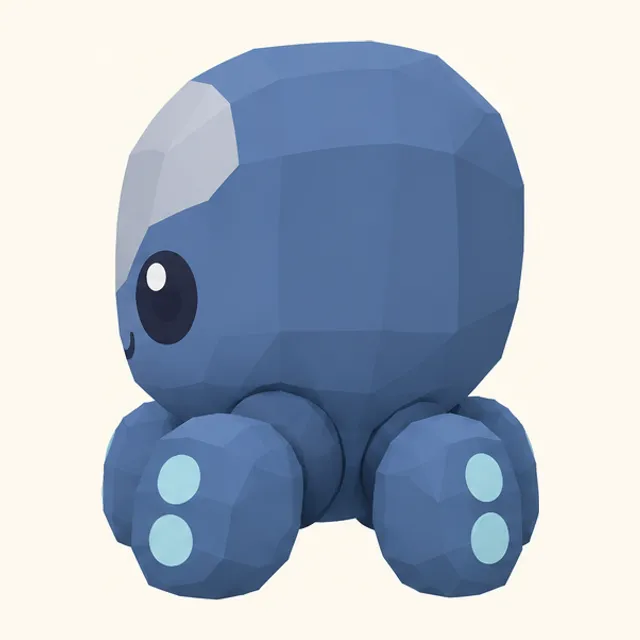
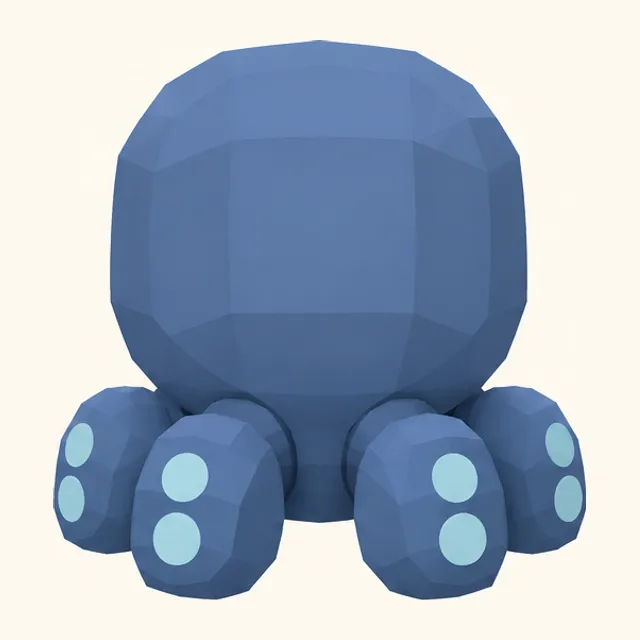
A gray-blue cube octopus with large eyes, a pale spot on its forehead and eight short, thick arms in four paired blocks; its suckers are painted on.

Signature ability

Ink Getaway
A 3×3 cloud on the densest cluster: 200 damage, Blinded and Staggered for 3 s, 40 Shade damage per second for 4 s; Metropus is Hidden for 1.5 s.
Passive trait
3D Memory
Metropus remembers every water route it has visited and every object it has created; its Maneuvers between known points cost less, and it interacts with objects faster.
Moves
Concrete Mimicry
Shade / Maneuver
Changes its skin texture and gains Stealth near artificial surfaces.

Eight-Arm Hack
Instinct / Support
Quickly opens, disables or moves a small object.

Drain Dash
Flow / Maneuver
Travels a long distance through a connected water system.
Ink Getaway
Signature move
Shade / Field
Creates a dark cloud and at the same time repositions one of its own objects within the zone.
Evolution




Line E-06: Cephalopod Spiral
Ammonaut → Lumisquid → Metropus
First evolution: moving from deep karst systems into the open sea, the outer shell gradually shrinks away, buoyancy comes under the control of soft tissues, and communication shifts to patterns of light.
Second evolution: life in a complex network of artificial canals and flooded tunnels sharpens intelligence, tentacle dexterity and spatial memory. Metropus becomes one of the most trainable Evolumes of its generation.